

A Capsular Contracture is an internal condition causing symptoms that are usually immediately noticeable. The most common symptoms of capsular contracture include:
LEADING BREAST SURGEON IN ROCKVILLE, MARYLAND
Breast IMplant Correction
Welcome to our Maryland plastic surgery practice, with Board Certified Plastic Surgeon, Bennett C. Yang, MD, and our staff of experienced medical professionals. We are dedicated to your personalized care and make great efforts to help you achieve your aesthetic goals.
Breast Implant Revision or Replacement
Breast augmentation is one of the most popular cosmetic surgeries in America, in large part due to its proven safety and success record.
This popular procedure offers many patients with a smaller bust line the chance to enhance their body contours by receiving shapely, full breasts.
With that being said, although breast augmentation complications are rare, they do affect a small percentage of patients. The most common breast augmentation complication is called capsular contracture. Capsular contracture can affect the way your breasts look and feel. Fortunately, the condition can be treated with medication or a surgical breast implant revision.
When it comes to breast implant replacement, the capsular contracture condition remains the most common reason for breast augmentation revision surgery. To resolve this issue, patients must be aware that it is highly technique-dependent. Please contact Dr. Bennett C. Yang today.
What Is A Capsular Contracture?
Capsular contracture is the term used to describe a hard firm breasts after breast augmentation surgery. This is caused by thick firm scar tissue that forms around the implant. Capsular contracture is an unpredictable complication. This is the most common complication following breast augmentation. It can form on either one breast or both. It is more common when the periareolar incision is used.
The examination of each breast is classified on the Baker scale of I to IV:
- Grade I: The breast is soft and normal
- Grade II: The breast is less soft than normal, and the implant can be palpated
- Grade III: The breast is firm, the implant can be palpated easily, and an asymmetrical distortion of shape can be appreciated
- Grade IV: The breast is hard, tender, painful, and the shape distortion is pronounced or severe
Capsular contracture usually develops slowly after breast augmentation surgery. After the breast implants are placed, sometimes the body recognizes them as a foreign object. As a type of defensive response, the body forms a pocket of tissue around the implant. In normal circumstances, the capsule of tissue is thin, and still leaves room for the implant to move.
Capsular Contracture Symptoms
- Breast tissue that is hard to the touch
- Breasts that feel tight or too firm
- Tingling or pain in the breast or underarm pit
- Breast implants that shift or change positions
- Nipples that are no longer symmetrical
- One breast implant that sits higher than the other
When you experience capsular contracture, your body has formed a thick layer of scar tissue around the breast implant. The breast tissue is hard, and other symptoms may be occurring. In most cases, pain can start when the scar tissue squeezes in on the breast implant.
What Treatment Methods Are Available For Capsular Contracture?
Scar tissue is normal to form around any breast implant, and this is called the capsule. Everyone with breast implants forms a capsule, but for patients, the tissue gets thicker, or it shrinks, which is referred to as capsular contracture.
It is a potential complication of breast augmentation surgery. However, the rate of capsular contracture is extremely low, and substantially less than that reported in the published literature.
In capsular contracture, the tissue begins to squeeze the implants, causing discomfort and pain. If you notice discomfort or pain around your implant, or if it feels hard to the touch, it may be because of contracture.
SURGERY:
A capsulectomy (complete removal of the scar capsule).
For patients who do not experience significant softening during a trial of Accolate, the only other effective option is to remove the scar tissue surrounding the implant altogether. Although this does not eliminate the possibility of future scar tissue forming around the implant, it reduces the risk of subsequent capsular contracture compared to other methods. This is also typically done with an exchange to new implants at the same surgery.
Breast Implant Revision
Breast implant surgery, whether it is used for breast augmentation and breast reconstruction surgery, can provide years of issue-free function.
However, the majority of women who have breast implants will probably have one or more additional breast surgeries over the course of 30 or 40 years. Most patients consider having their implants replaced through breast revision surgery. This surgery can correct your breast appearance while replacing compromised breast implants to produce a healthier, natural, youthful appearance.
Breast Asymmetry
No patient’s natural breasts are identical in size, shape, or dimensions; therefore, it is normal to experience some minor asymmetry before and after your breast surgery.
If you are experiencing significant or severe asymmetry, this can typically be corrected with a revision breast implant augmentation that will provide you with a more balanced, attractive appearance.
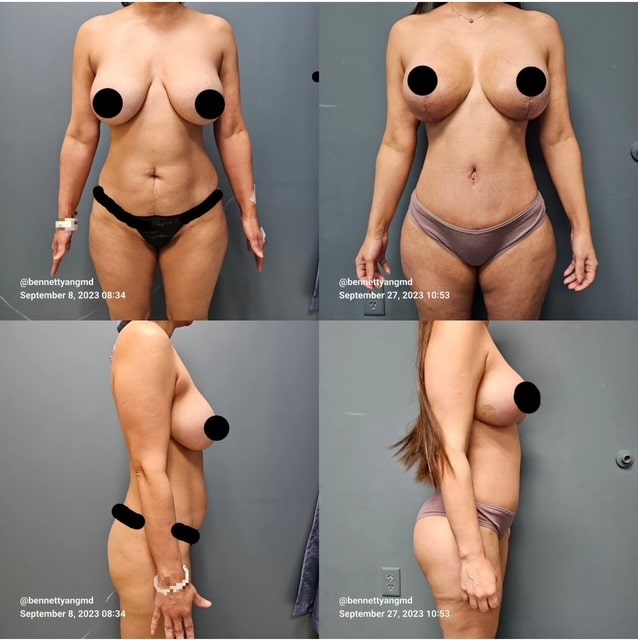
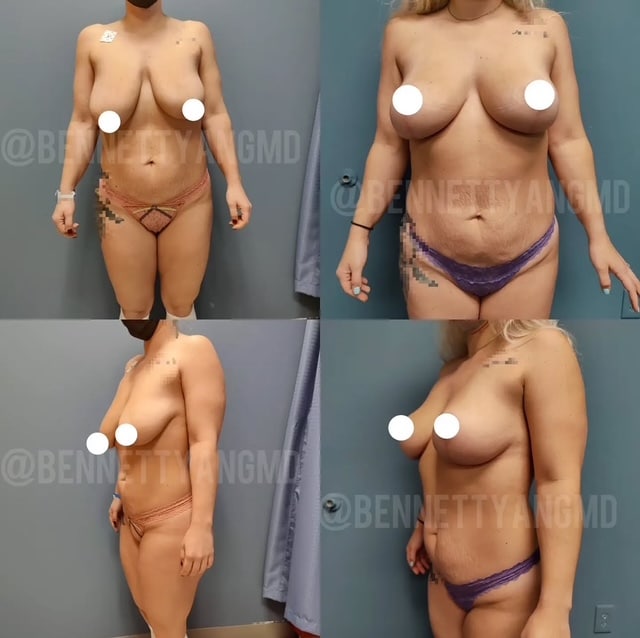
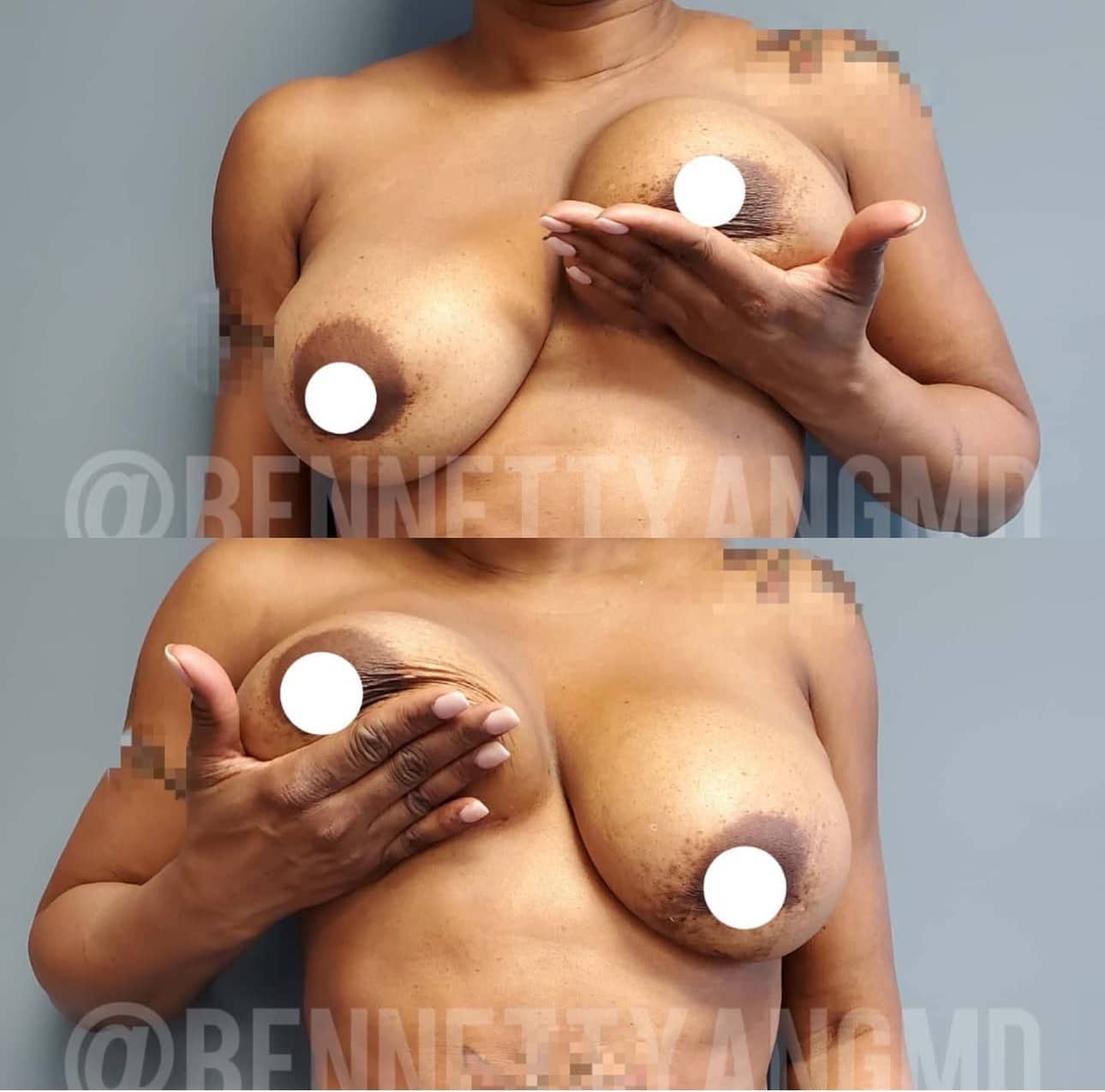
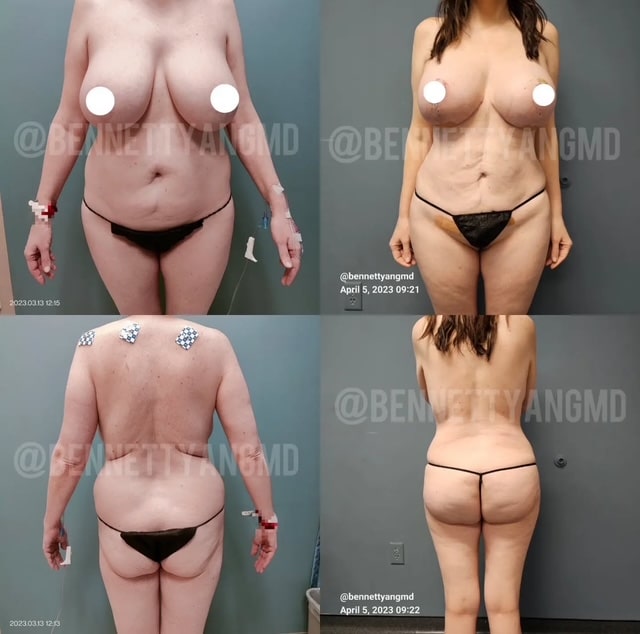
Deflation or Rupture of Breast Implants
Breast implants are medical devices that are designed to last; however, they can have issues over time.
Suppose one or both of your breast implants have ruptured or are leaking, causing deflation or other changes, breast implant replacement surgery can be performed, and a deflated or ruptured saline or silicone implant can be exchanged for a new implant of similar size and shape. Or you can choose to replace both implants for a different look and feel. In most cases, replacing both will ensure better symmetry and a more youthful appearance.
BREAST RECONSTRUCTION AFTER WEIGHT LOSS
Changes In Your Breast Appearance
If you have lost a substantial amount of weight, the joy of reaching your goal size is saddened by the realization that your breasts have lost their volume and shape. Luckily, surgical breast procedures are available to help restore a fuller breast appearance after significant weight loss. Both a breast lift and breast implants can be successfully used to provide lift and fullness.
Other factors, such as gravity, post-pregnancy, breastfeeding, or the body’s natural aging process, can cause your breast implants to droop, changing the appearance of your breast augmentation results over time.
A breast implant revision can be an option to remove sagging skin and droopy implants, and restore the perky, natural, younger appearance of your breasts.
Do You Have Breast Implant Displacement?
You don’t have to live with breast implant displacement.
In rare cases, your breast implants may shift from their original pocket position, dropping lower or “bottoming out,” causing the nipples to be positioned abnormally high on the breasts.
This can happen to one or both implants because of many different factors, such as an error in the initial placement of the implants, breast implants that are too large, gravity, and problems with your breast skin.
Breast Implant Revision can reposition the implants to an appropriate position, providing a natural, attractive look.
Breast Surgery Questions Patients Ask Dr. Yang
Why Do Breast Implants Need To Be Replaced?
Breast implants are not lifetime devices, as stated by the FDA and major plastic surgery organizations. While modern saline and silicone implants are durable and can last many years—often 10–20 years or longer—they are not designed to remain in place forever without potential issues. The need for replacement arises from a combination of medical complications, wear over time, changes in the body, and personal preferences.
Primary Medical Reasons for Replacement
The most common reasons requiring replacement include: Implant rupture or leakage.
Over time, the implant shell can develop a tear or hole. Saline implants deflate noticeably (often within days), making the rupture obvious, with the body safely absorbing the saltwater.
Silicone implants often have “silent” ruptures (no immediate symptoms), in which the gel may remain contained or migrate slightly, requiring imaging such as MRI or ultrasound for detection (FDA recommends screening starting 5–6 years post-surgery, then every 2–3 years).
Rupture risk increases gradually (roughly ~1% per year cumulatively in some studies), becoming more likely after 10–15 years.
Capsular Contracture: The body naturally forms a scar tissue capsule around the implant. In some cases, this capsule tightens and hardens, causing pain, firmness, distortion of breast shape, or asymmetry. Severe cases (grades III–IV) usually require surgical intervention, including implant removal/replacement and often capsulectomy (removing the scar tissue).
Other complications that may necessitate replacement include: Implant displacement, rippling, or bottoming out.
Changes due to aging, gravity, pregnancy, weight fluctuations, or breastfeeding, which can affect breast appearance even if the implants remain intact. Rare issues like infection, or in specific cases (e.g., certain textured implants), are associated with conditions like BIA-ALCL (a type of lymphoma).
How Do I Know If I Need To Replace Or Remove My Breast Implants?
Knowing if your breast implants need replacement (revision/exchange) or removal (explant) depends on medical complications, symptoms, imaging results, or personal/health-related preferences. Breast implants are not lifetime devices, and the FDA and American Society of Plastic Surgeons (ASPS) emphasize regular monitoring. Many last 10–20+ years without issues, but problems can arise at any time.Always consult a board-certified plastic surgeon for personalized evaluation—self-diagnosis isn’t reliable, and imaging or exams are often needed for confirmation.
Key Signs Indicating You May Need Replacement or Removal
Here are the most common indicators, grouped by category:
Pain, Discomfort, or Tightness: persistent or worsening pain, soreness, pressure, or a feeling of tightness in the chest/breasts (beyond initial post-op recovery) often signals issues like capsular contracture (scar tissue hardening around the implant, squeezing it). This can make breasts feel unnaturally firm, distorted, or spherical. Severe cases (e.g., Baker Grade III/IV) usually require surgical intervention, often including capsulectomy (removing scar tissue) and implant replacement or removal.
Visible or Noticeable Changes in Appearance/Position: Uneven breasts, asymmetry, or distortion.
Bottoming out (implant drops too low), rippling/wrinkling (especially visible under thin skin), or displacement (implant shifts sideways/upward).
Changes in shape, size, or profile over time (due to aging, weight fluctuations, pregnancy, or gravity).
These often prompt revision for aesthetic reasons or to correct complications.
Signs of Implant Rupture or Leakage:
Saline Implants: Obvious deflation (breast appears smaller/flatter within days), as saline is absorbed harmlessly.
Silicone implants: Often “silent” (no immediate symptoms), but possible signs include: Decreased breast size or shape change. Hard lumps/knots, uneven appearance, swelling, tenderness, pain, tingling, numbness, burning, or firmness.
FDA recommends regular screening (MRI/ultrasound) for silicone implants—typically starting 5–6 years post-op, then every 2–3 years—to detect silent ruptures. If confirmed, replacement (or removal) is usually advised.
Can I Change The Size Or Type Of Implants With My Replacement Surgery?
No, breast implant replacement surgery (also called implant exchange or revision surgery) is not the same as your first breast augmentation surgery, though there are similarities. While both involve placing implants and aim to enhance breast appearance, replacement/revision is typically a secondary procedure that builds on your existing anatomy and prior surgery, making it different in purpose, complexity, technique, recovery, and other factors.
According to the American Society of Plastic Surgeons (ASPS), here’s a clear comparison:
Key Similarities
Goal: Both enhance or improve breast size, shape, and proportion using implants.
Anesthesia: Usually general anesthesia or IV sedation.
Outpatient Procedure: Most are same-day surgeries (you go home the same day).
Incisions: Surgeons often reuse the original incisions (e.g., inframammary fold, periareolar) to minimize new scarring.
Implant placement: New implants are inserted into the existing or adjusted pocket.
Key Differences
Replacement/revision surgery is often more complex because it addresses existing scar tissue, changes from the first surgery, potential complications, and your evolved anatomy (e.g., due to aging, weight changes, or pregnancy).
How Often Should I Replace My Breast Implants?
Yes, you can absolutely change the size, type, shape, or profile of your breast implants during replacement (also called revision or exchange) surgery. This is one of the most common reasons women undergo breast implant revision procedures.
Breast implant revision is highly customizable to your goals, whether you’re addressing a complication (like rupture or capsular contracture) or simply want an update for aesthetic or lifestyle reasons.
Common Changes People Make During Replacement
Size adjustments — Going bigger or smaller is very frequent.
Larger Implants: Dr. Yang may enlarge the breast pocket (the space where the implant sits) to accommodate the new size. This can help achieve more volume or projection. Smaller implants: The pocket may need tightening (e.g., with sutures or capsule modification) to fit the new implant properly and avoid issues such as rippling or excess space. Many women in recent years (including trends noted in 2025–2026) have opted to downsize for a more natural, proportionate look, greater comfort during exercise, or to align with lifestyle changes.
Is Breast Implant Replacement Surgery The Same As My First Augmentation Surgery?
No, breast implant replacement surgery (also called implant exchange or revision surgery) is not the same as your first breast augmentation surgery, though there are similarities. While both involve placing implants and aim to enhance breast appearance, replacement/revision is typically a secondary procedure that builds on your existing anatomy and prior surgery, making it different in purpose, complexity, technique, recovery, and other factors.
According to the American Society of Plastic Surgeons (ASPS), here’s a clear comparison:
Key Similarities
Goal: Both enhance or improve breast size, shape, and proportion using implants.
Anesthesia: Usually general anesthesia or IV sedation.
Outpatient Procedure: Most are same-day surgeries (you go home the same day).
Incisions: Surgeons often reuse the original incisions (e.g., inframammary fold, periareolar) to minimize new scarring.
Implant placement: New implants are inserted into the existing or adjusted pocket.
Key Differences
Replacement/revision surgery is often more complex because it addresses existing scar tissue, changes from the first surgery, potential complications, and your evolved anatomy (e.g., due to aging, weight changes, or pregnancy).
Bennett C. Yang, MD.
Partner With Us to Reclaim Your Desired Look
If you’re feeling self-conscious or unhappy with the appearance of your breasts or facing complications or pain from a previous breast augmentation, Dr. Yang is here to help.
With years of expertise in breast implant revision, Dr. Yang combines surgical precision with an artistic approach to give you beautiful, youthful results that are both attractive and natural-looking. He can address your breast implant issues and give you options to correct them. Whether you’re facing implant displacement, rupture, asymmetry, capsular contracture, or wish to update your implant size and or type, Dr. Bennett C. Yang is dedicated to helping you feel your very best.

EXCELLENTTrustindex verifies that the original source of the review is Google. Wonderful doctor and his assistant Bonnie is kind and attentive. Dr.Yang is always accessible to his patients.Posted on GoogleTrustindex verifies that the original source of the review is Google. Excelente trabajo , muy profesional lo recomiendo.Posted on GoogleTrustindex verifies that the original source of the review is Google. The BEST plastic surgeon! Dr.Yang cares, he is there for you every step of the way. He is personable and gets to know patients to ensure that he gains their trust! If you want the best results and to be under the best care, please do yourself a favor and choose Dr.Yang!Posted on GoogleTrustindex verifies that the original source of the review is Google. Greetings! On May 23, 2022 I had a lipo/ BBL, and a breast augmentation. From the beginning, I found Dr. Yang to be very honest. He’s definitely not the type of Dr. that’s going to tell you what you want to hear, he’s going to tell you the absolute truth. I am thoroughly pleased with my results. The professionalism from everyone starting with Bonnie to the receptionists, and staff were outstanding. Looking forward to getting more done soon. You can’t go wrong with Dr. Yang!!!!Posted on GoogleTrustindex verifies that the original source of the review is Google. My friend and I came there for a consultation and I have already seen a few doctors already. Dr. Yang gave me the most honest advice for my well being. The others I felt they just wanted the money. I have been a client of his and he is the most genuine Dr and will tell you what you need to hear not what you want to hear. I definitely recommend him. Sadly my friend went with another doctor and she is regretting it. I am very happy with my results with Dr. Yang and will go to him for any other future work.Posted on GoogleTrustindex verifies that the original source of the review is Google. Dr. Yang is a great doctor, who makes you laugh even if you're having a bad day. I would recommend him to any and everyone. I had a great experience when I decided to have surgery, and he is very honest with his recommendations, which made me laugh even more. If you want a doctor that is upfront, honest, with a great personality...look no further.Posted on GoogleTrustindex verifies that the original source of the review is Google. Fantastic Dr.; I could elaborate, however I do not want to go into details. I've seen him three times already over the years.Posted on GoogleTrustindex verifies that the original source of the review is Google. The best plastic surgeon EVER! My experience from the very first visit was amazing!! The staff and Bonnie were warm and welcoming. I was seen right away and Dr. Yang has the best bedside manner I have ever experienced with any doctor. He is kind, caring and listened to all my wants and concerns. He answered all my questions thoroughly. I had a breast augmentation 5 years ago after 2 kids and they turned out beautiful, exactly what I wanted. I went back recently for a lift to make smaller so I coupursue my yoga career. My husband thought my first augmentation was perfect and was afraid I would be unhappy with the scarring knowing that I am a perfectionist. Dr.Yang exceeded both of our expectations!!! They are perfect with almost no scaring... it’s unbelievable! I have also been getting juvaderm and Botox for the last 3 years. I am very pleased with his work. He truly is an artist. He is so passionate about his work. I highly recommend Dr. Yang. He goes above and beyond for his patients.Posted on GoogleTrustindex verifies that the original source of the review is Google. My niece recommended Dr. Yang to me when I was looking for someone to preform my breast reduction. He had been her doctor in the past and said he was excellent. She was absolutely correct. Dr. Yang is professional and caring. He explained the procedure and told me what to expect after it was completed. I felt valued as a patient. I received excellent care and my surgery was very successful. I have been very pleased with the results. His staff is also friendly and welcoming. This is truly a top-notched care facility. I highly recommend Dr. Bennett Yang to anyone seeking plastic surgery.
Our Reviews
The BEST plastic surgeon! Dr.Yang cares, he is there for you every step of the way. He is personable and gets to know patients to ensure that he gains their trust! If you want the best results and to be under the best care, please do yourself a favor and choose Dr.Yang!
- CR SB
Wonderful doctor and his assistant Bonnie is kind and attentive. Dr.Yang is always accessible to his patients.
- Fernanda Torres (Fern)
My niece recommended Dr. Yang to me when I was looking for someone to preform my breast reduction. He had been her doctor in the past and said he was excellent. She was absolutely correct. Dr. Yang is professional and caring. He explained the procedure and told me what to expect after it was completed. I felt valued as a patient. I received excellent care and my surgery was very successful. I have been very pleased with the results. His staff is also friendly and welcoming. This is truly a top-notched care facility. I highly recommend Dr. Bennett Yang to anyone seeking plastic surgery.
- Nikki Whitehead
Greetings!
On May 23, 2022 I had a lipo/ BBL, and a breast augmentation. From the beginning, I found Dr. Yang to be very honest. He’s definitely not the type of Dr. that’s going to tell you what you want to hear, he’s going to tell you the absolute truth. I am thoroughly pleased with my results. The professionalism from everyone starting with Bonnie to the receptionists, and staff were outstanding. Looking forward to getting more done soon. You can’t go wrong with Dr. Yang!!!!
- Michelle Wallace- Tabb
Your Options:
A Virtual Consultation Or At Our Rockville Practice
Dr. Bennett C. Yang is committed to you, as his patient, and the procedures he offers, such as breast augmentation, breast reduction, lift, etc. We’re excited to create your treatment plan around your personal cosmetic goals.
During your consultation, Dr. Yang will work closely with you to learn about your lifestyle and aspirations and develop a perfect procedural plan to move forward for the best results.
He brings extensive experience to every breast surgical procedure he performs and is waiting to create the beautiful outcome you wish for.
FREE VIRTUAL CONSULT: Please send Dr. Yang, your before images on the secure form below to learn more about how he can help you achieve in your body reshaping journey.